



Hazardous Area Classification for Explosive Gas and Dust Atmospheres
Time:2026-01-14
|
Hazardous area classification is a critical part of explosion protection engineering. It helps determine the likelihood of explosive gas or combustible dust being present and ensures that the correct explosion-proof equipment is selected for safe operation. Hazardous areas are generally divided into gas atmosphere zones and dust atmosphere zones based on the frequency and duration of the explosive environment. |
 |
I. Classification of Explosive Gas Atmospheres
Zone 0
Zone 0 refers to areas where explosive gas atmospheres are continuously present, occur frequently, or remain for long periods during normal operation.
Typical examples include certain enclosed sections of offshore oil drilling platforms, fuel tanks, or chemical processing equipment.
- • Hazardous gas presence: ≥ 1000 hours per year
- • Risk level: Very high
- • Required protection level: Highest explosion-proof standard
Zone 1
Zone 1 refers to areas where explosive gas atmospheres are likely to occur during normal operation.
Examples include:
- • Non-mining working faces in coal mines
- • Enclosed process areas in petrochemical plants
- • Areas near ventilation openings or valves
- • Hazardous gas presence: 10 to 1000 hours per year
- • Risk level: High
Zone 2
Zone 2 refers to areas where explosive gas atmospheres are not likely to occur during normal operation and, if they do occur, will exist only for a short time under abnormal conditions.
Typical examples include open or well-ventilated areas in petroleum and petrochemical facilities.
- • Hazardous gas presence: ≤ 10 hours per year
- • Risk level: Lower compared to Zone 0 and Zone 1
II. Classification of Combustible Dust Atmospheres
Zone 20
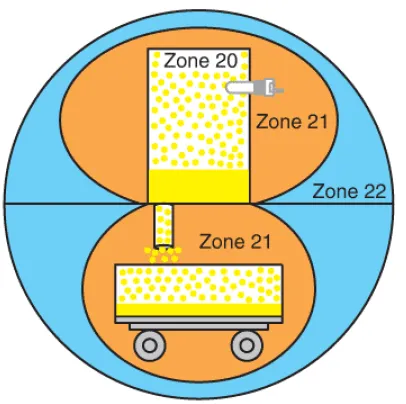
Zone 20 includes areas inside equipment or containers where combustible dust is continuously or frequently present during normal operation in concentrations sufficient to form explosive dust-air mixtures.
Typical examples include:
- • Dust silos
- • Powder storage hoppers
- • Internal sections of dust handling equipment
- • Combustible dust presence: ≥ 1000 hours per year
- • Risk level: Very high
Zone 21
Zone 21 refers to areas where combustible dust clouds are likely to occur during normal operation.
Examples include external areas surrounding dust processing equipment or material transfer points.
- • Combustible dust presence: 10 to 1000 hours per year
- • Risk level: High
Zone 22
Zone 22 refers to areas where combustible dust clouds are not expected during normal operation and occur only infrequently for short periods under abnormal conditions.
A typical example is the outlet area of a bag-type dust collector during equipment malfunction.
- • Combustible dust presence: ≤ 10 hours per year
- • Risk level: Lower
Key Factors in Hazardous Area Classification
Hazardous area classification should not rely solely on the duration of gas or dust presence. Engineers must also evaluate several important factors, including:
- • Quantity and concentration of flammable substances
- • Explosion limits of gases or dust
- • Ventilation efficiency
- • Process operating conditions
- • Equipment layout and environmental conditions
Under certain controlled conditions, some locations may also be classified as non-hazardous areas.
Conclusion
Accurate hazardous area classification is essential for selecting the correct explosion-proof equipment and ensuring operational safety in industries such as oil & gas, petrochemical, mining, pharmaceutical, and dust processing facilities.
By understanding the differences between Zone 0, 1, 2 and Zone 20, 21, 22, engineers can significantly reduce explosion risks and improve overall plant safety and compliance.
For more professional insights into explosion-proof technology, hazardous area protection, and intrinsic safety solutions, feel free to contact STS at any time.
|
Hazardous area classification is a critical part of explosion protection engineering. It helps determine the likelihood of explosive gas or combustible dust being present and ensures that the correct explosion-proof equipment is selected for safe operation. Hazardous areas are generally divided into gas atmosphere zones and dust atmosphere zones based on the frequency and duration of the explosive environment. |
|
I. Classification of Explosive Gas Atmospheres
Zone 0
Zone 0 refers to areas where explosive gas atmospheres are continuously present, occur frequently, or remain for long periods during normal operation.
Typical examples include certain enclosed sections of offshore oil drilling platforms, fuel tanks, or chemical processing equipment.
- • Hazardous gas presence: ≥ 1000 hours per year
- • Risk level: Very high
- • Required protection level: Highest explosion-proof standard
Zone 1
Zone 1 refers to areas where explosive gas atmospheres are likely to occur during normal operation.
Examples include:
- • Non-mining working faces in coal mines
- • Enclosed process areas in petrochemical plants
- • Areas near ventilation openings or valves
- • Hazardous gas presence: 10 to 1000 hours per year
- • Risk level: High
Zone 2
Zone 2 refers to areas where explosive gas atmospheres are not likely to occur during normal operation and, if they do occur, will exist only for a short time under abnormal conditions.
Typical examples include open or well-ventilated areas in petroleum and petrochemical facilities.
- • Hazardous gas presence: ≤ 10 hours per year
- • Risk level: Lower compared to Zone 0 and Zone 1
II. Classification of Combustible Dust Atmospheres
Zone 20
Zone 20 includes areas inside equipment or containers where combustible dust is continuously or frequently present during normal operation in concentrations sufficient to form explosive dust-air mixtures.
Typical examples include:
- • Dust silos
- • Powder storage hoppers
- • Internal sections of dust handling equipment
- • Combustible dust presence: ≥ 1000 hours per year
- • Risk level: Very high
Zone 21
Zone 21 refers to areas where combustible dust clouds are likely to occur during normal operation.
Examples include external areas surrounding dust processing equipment or material transfer points.
- • Combustible dust presence: 10 to 1000 hours per year
- • Risk level: High
Zone 22
Zone 22 refers to areas where combustible dust clouds are not expected during normal operation and occur only infrequently for short periods under abnormal conditions.
A typical example is the outlet area of a bag-type dust collector during equipment malfunction.
- • Combustible dust presence: ≤ 10 hours per year
- • Risk level: Lower
Key Factors in Hazardous Area Classification
Hazardous area classification should not rely solely on the duration of gas or dust presence. Engineers must also evaluate several important factors, including:
- • Quantity and concentration of flammable substances
- • Explosion limits of gases or dust
- • Ventilation efficiency
- • Process operating conditions
- • Equipment layout and environmental conditions
Under certain controlled conditions, some locations may also be classified as non-hazardous areas.
Conclusion
Accurate hazardous area classification is essential for selecting the correct explosion-proof equipment and ensuring operational safety in industries such as oil & gas, petrochemical, mining, pharmaceutical, and dust processing facilities.
By understanding the differences between Zone 0, 1, 2 and Zone 20, 21, 22, engineers can significantly reduce explosion risks and improve overall plant safety and compliance.
For more professional insights into explosion-proof technology, hazardous area protection, and intrinsic safety solutions, feel free to contact STS at any time.